


What You’ll Discover
- Are GHG Protocol and ISO moving toward one global carbon accounting standard?
- What could harmonization mean for corporate carbon reporting?
- Why is Scope 2 accounting receiving more attention?
- Should businesses wait for the new standard or prepare now?
- How can stronger data and governance improve reporting readiness?
- Can technology help businesses build carbon accounting systems ready for change?
- What should organizations do today to stay ahead of tomorrow’s requirements?
Carbon accounting is entering a new phase.
For more than a decade, the GHG Protocol has been the foundation on which companies have built their emissions inventories. At the same time, ISO 14064-1 has become an important reference point for organizations looking for structured and verifiable greenhouse gas accounting. Now, those two worlds are moving closer together.
On July 29, 2026, the Greenhouse Gas Protocol (GHGP) announced that it is working with the International Organization for Standardization (ISO) to bring their corporate carbon accounting standards into a single, harmonized global framework. The proposed consolidation will bring together GHGP’s Scope 1, Scope 2, Scope 3 and Actions and Market Instruments (AMI) work with ISO 14064-1.
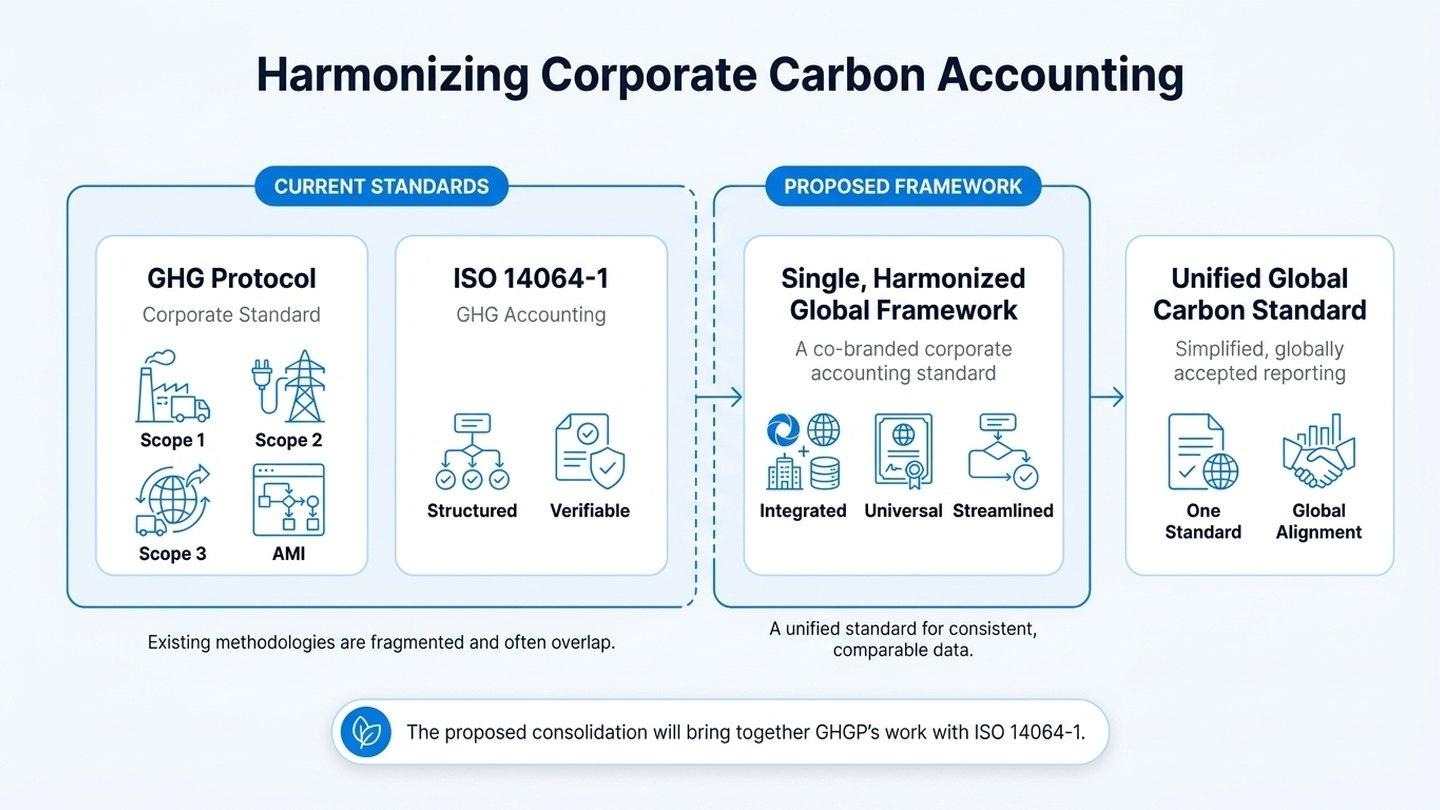
For businesses, this is more than a standards update. It signals a broader shift in how carbon data will need to be managed: with greater consistency, stronger governance, better documentation, and, increasingly, the ability to stand up to scrutiny.
At Credibl ESG, we see this development as an important reminder that organizations should not wait for the next version of a standard to improve the quality of their emissions data. The companies that build strong carbon-accounting foundations today will be better positioned for whatever the final framework looks like tomorrow.
One Direction, Fewer Rulebooks
One of the biggest challenges in corporate carbon accounting has never simply been calculating emissions. It has been navigating different methodologies, boundaries, terminology, and expectations across reporting frameworks. The proposed GHGP-ISO consolidation aims to address part of that complexity.
The initiative is expected to bring Scope 1, Scope 2, Scope 3 and Actions and Market Instruments into alignment with ISO 14064-1, creating a single, co-branded corporate accounting standard. An integrated public consultation is currently planned for Q2 2027, while the final standard is expected later in the development process.
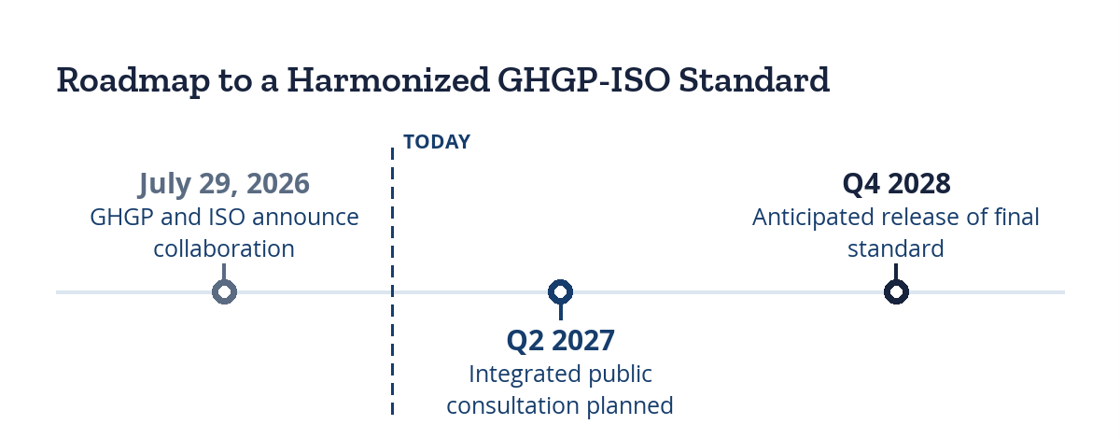
The potential benefit is significant: less duplication and greater comparability across companies, markets, and jurisdictions. For multinational organizations in particular, greater harmonization could reduce the need to interpret multiple overlapping requirements and make carbon information easier to understand across different stakeholders.
But harmonization does not automatically mean simplicity. Companies will still need reliable activity data, clearly defined organizational boundaries, documented calculation methodologies, and appropriate controls. A better rulebook cannot compensate for weak underlying data. That is where the real work begins.

Why Scope 2 Accounting is under the Spotlight?
Scope 2 accounting is receiving increased attention as part of the development of the consolidated GHG Protocol and ISO framework. GHGP’s recent consultation received nearly 1,100 responses from 56 countries, highlighting the complexity of accounting for purchased electricity, renewable energy, location-based and market-based emissions, data sources, and contractual arrangements.
The strong response also shows that businesses need more than technically rigorous standards, they need methodologies that work across different grid markets, procurement models, and operational realities. This makes it increasingly important for organizations to look beyond compliance and build GHG inventories that are comparable, transparent, traceable, and robust enough to support assurance.
The Standards May Change. Your Foundation Shouldn’t.
Carbon accounting is cumulative, and the quality of an organization’s historical emissions, base-year data, Scope 3 information, supplier inputs, methodologies, and supporting evidence shapes its long-term reporting maturity. While standards may evolve, these underlying capabilities will remain essential. Rather than waiting for new requirements, organizations should focus on building complete Scope 1, 2 and 3 inventories, improving data quality and traceability, clearly defining data ownership, and documenting methodologies and assumptions.
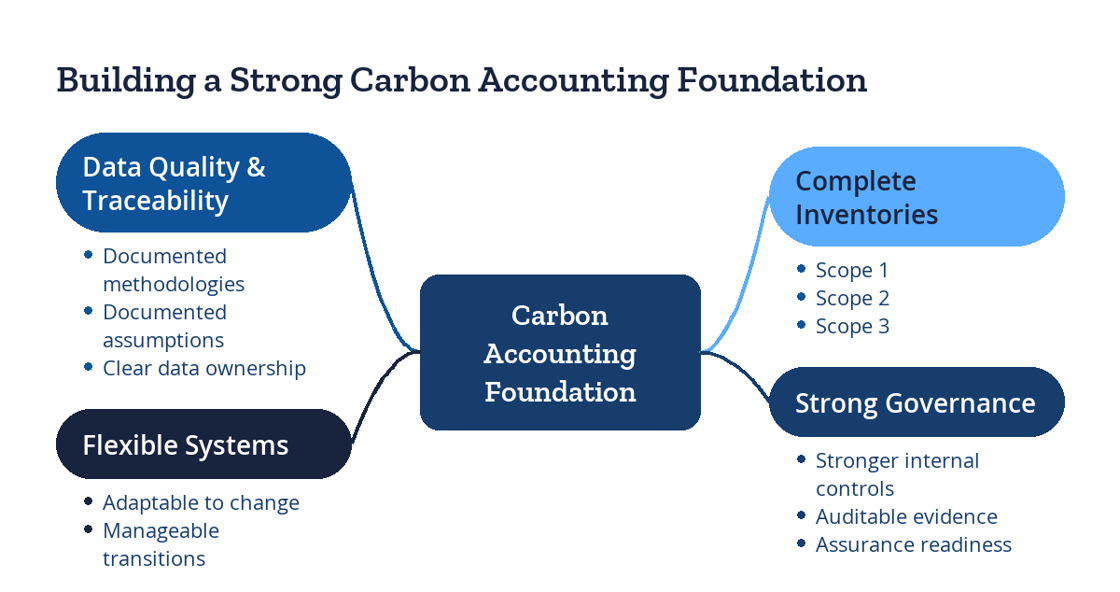
At the same time, stronger internal controls, auditable evidence, assurance readiness, and flexible systems will help organizations adapt as carbon accounting requirements change. The goal is to build a carbon accounting foundation around reliable data and adaptable governance, so changes in standards become a manageable transition, not a reporting disruption.
What This Means for the Next Generation of ESG Reporting.
The GHGP-ISO development is part of a larger trend in sustainability reporting: climate information is moving from voluntary disclosure toward structured, decision-useful and increasingly assured information.
The GHGP-ISO development is part of a larger trend in sustainability reporting: climate information is moving from voluntary disclosure toward structured, decision-useful and increasingly assured information.
Organizations preparing for frameworks such as IFRS S2, national sustainability reporting requirements, GHG assurance or investor scrutiny will increasingly need to demonstrate not only what their emissions are, but how those numbers were produced. That changes the role of ESG technology.
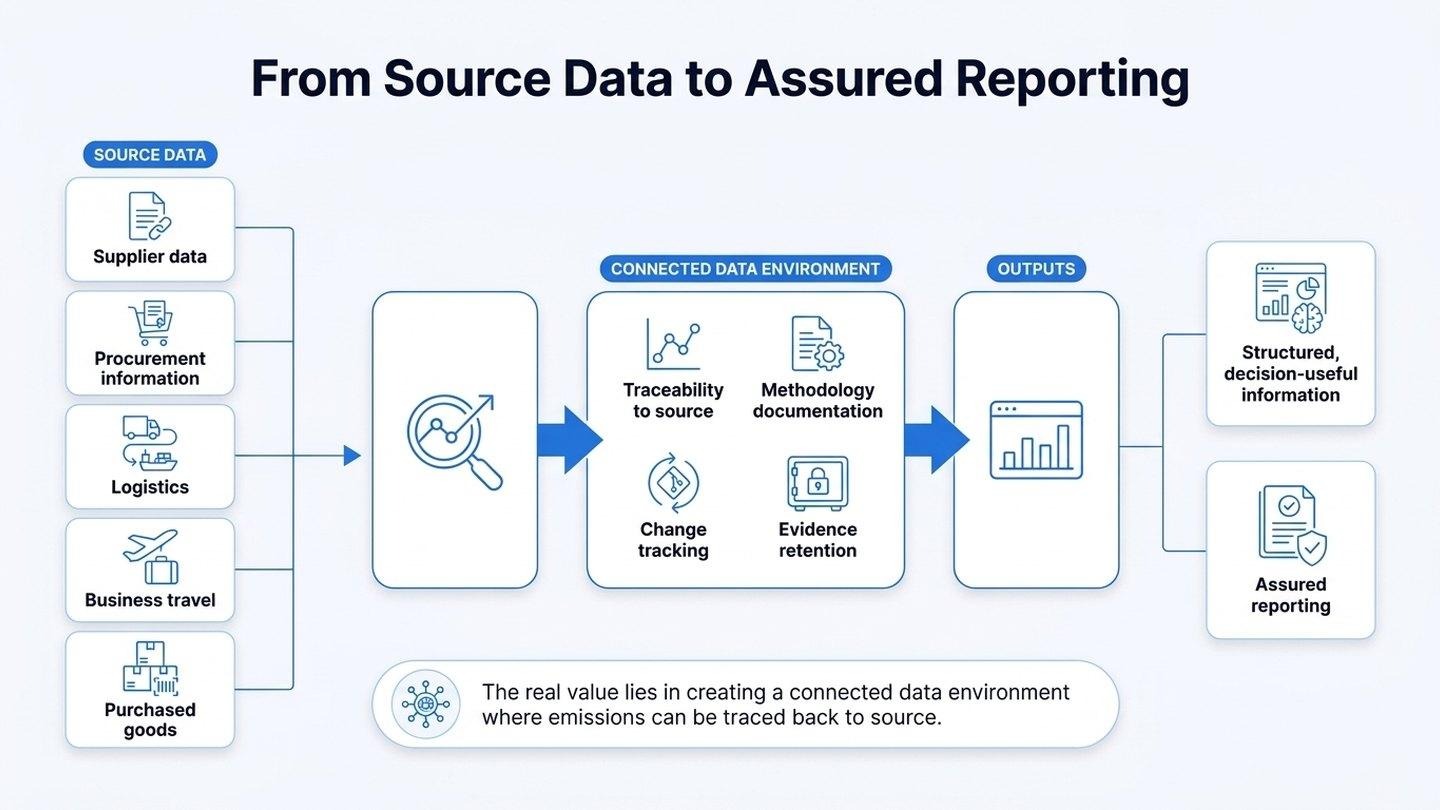
A carbon platform can no longer be viewed simply as a place to enter emissions figures and generate a report. The real value lies in creating a connected data environment where emissions can be traced back to source, methodologies can be documented, changes can be tracked and evidence can be retained.
This becomes particularly important as Scope 3 expands the reporting challenge. Supplier data, procurement information, logistics, business travel, purchased goods and other value-chain activities often sit across different systems and teams. Without strong data governance, organizations can end up with numbers that look complete but are difficult to defend.
Credibl ESG’s Take: Build for Change, Not Just Compliance
At Credibl ESG, we believe the most important takeaway from the GHGP-ISO alignment is not simply that a new standard is coming. It is that carbon accounting is becoming an infrastructure. As standards converge and climate disclosures become more scrutinized, companies need a carbon data foundation that can evolve alongside regulatory and methodological changes. This is where a technology-led approach can make a meaningful difference.
Credibl ESG helps organizations bring ESG and carbon data into a structured, traceable environment connecting data collection, calculations, evidence, reporting and governance rather than treating them as disconnected activities.

The organizations that start strengthening their carbon data, controls, and governance now will enter the next chapter of carbon accounting with considerably less friction. The standard may be changing. The need for credible data isn’t. And that is ultimately the direction we see at Credibl ESG: moving organizations from carbon reporting as a periodic exercise toward credible, continuous and decision-ready carbon intelligence.
Frequently Asked Questions
1. What is changing with the GHG Protocol and ISO 14064-1?
The GHG Protocol and ISO are working toward combining their corporate carbon accounting standards into a single, harmonized framework. The proposed consolidation brings together GHGP’s Scope 1, Scope 2, Scope 3 and Actions and Market Instruments work with ISO 14064-1.
2. When will the new harmonized standard be available?
The current roadmap indicates that an integrated public consultation on the consolidated standard is planned for Q2 2027. The final standard is currently anticipated in Q4 2028, although timelines may evolve during the standard-setting process.
3. Should companies wait for the new standard before updating their emissions inventories?
No. Companies should continue improving their Scope 1, Scope 2 and Scope 3 inventories. Better data quality, documentation, governance and assurance readiness will remain valuable even as specific methodologies evolve.
4. Why is Scope 2 receiving so much attention?
Purchased electricity is a major source of emissions for many organizations, and Scope 2 accounting involves complex questions around location-based and market-based approaches, renewable electricity procurement and associated instruments. GHGP’s recent consultation received nearly 1,100 responses, demonstrating the level of interest in getting these methodologies right.
5. What should organizations do now to prepare?
Organizations should focus on building a strong carbon data foundation. This includes improving data quality, defining clear organizational and operational boundaries, documenting methodologies, strengthening internal controls, maintaining evidence and preparing for independent assurance.
6. How can ESG technology help with the transition?
A robust ESG platform can help organizations centralize emissions data, standardize calculations, maintain supporting evidence, establish data ownership and improve traceability. The goal is not simply to produce a carbon report, but to create a reliable data foundation that can adapt as reporting standards and requirements evolve.
7. What is the key takeaway for businesses?
Don’t wait for the standard to change before improving your carbon accounting.
The strongest preparation is to build an emissions data and governance system that is transparent, traceable and flexible enough to accommodate future methodological changes.
Transform Your Company’s Carbon Footprint Management with AI-powered Credibl ESG Platform – Book a demo now